
Respecting Nature
Protecting the environment, reducing waste and making a positive contribution to biodiversity
For many years we have had guiding principles and standards that seek to protect the environment. Now we are stepping up our environmental ambitions and shaping them to contribute to the UN Sustainable Development Goals.
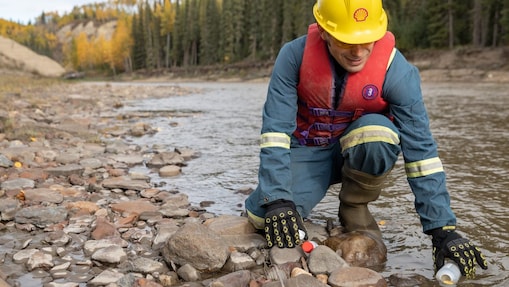
Our environmental ambitions include protecting and enhancing biodiversity – the plant and animal life that is vital for the planet. We are also focusing on using water and other resources more efficiently across all our activities, reusing as much of them as we can.
We are reducing waste from our operations and increasing recycling of plastics. We are helping to improve air quality by reducing emissions from our operations and providing cleaner ways to power transport and industry.
Working with our partners and suppliers and developing new collaborations is key. We will join with others across industry, governments, our customers and supply chains to protect nature.

We have set environmental ambitions for 2030 and later, as well as shorter-term goals. We will continue to look for opportunities to go further and will report our progress in a transparent way.
How Shell is Respecting Nature
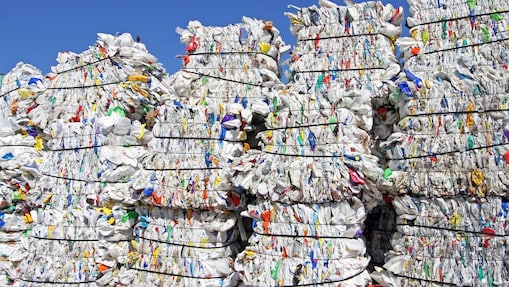
- By 2030, we will increase the amount of recycled plastic in our packaging to 30% and ensure that the packaging we use for our products is reusable or recyclable.
- We will reduce the amount of fresh water consumed in our facilities, starting by reducing fresh water consumption by 15% by 2025 compared with 2018 levels in areas where there is high pressure on fresh water resources.
- We are aiming for zero waste by increasing reuse and recycling in our business and supply chains.
- We will demonstrate an overall positive impact on biodiversity from our new projects in areas rich in biodiversity, called critical habitats. This will include investing in conservation and taking steps to safeguard and, where possible, enhance local environments.
Learn How Shell is Powering Progress



Featured Content
Legal Disclaimer
Legal Disclaimer
The companies in which Shell plc directly and indirectly owns investments are separate legal entities. In this content “Shell”, “Shell Group” and “Group” are sometimes used for convenience where references are made to Shell plc and its subsidiaries in general. Likewise, the words “we”, “us” and “our” are also used to refer to Shell plc and its subsidiaries in general or to those who work for them. These terms are also used where no useful purpose is served by identifying the particular entity or entities. “Subsidiaries’’, “Shell subsidiaries” and “Shell companies” as used in this content refer to entities over which Shell plc either directly or indirectly has control. Entities and unincorporated arrangements over which Shell has joint control are generally referred to as “joint ventures” and “joint operations”, respectively. Entities over which Shell has significant influence but neither control nor joint control are referred to as “associates”. The term “Shell interest” is used for convenience to indicate the direct and/or indirect ownership interest held by Shell in an entity or unincorporated joint arrangement, after exclusion of all third-party interest.
This content contains forward-looking statements (within the meaning of the U.S. Private Securities Litigation Reform Act of 1995) concerning the financial condition, results of operations and businesses of Shell plc. All statements other than statements of historical fact are, or may be deemed to be, forward-looking statements. Forward-looking statements are statements of future expectations that are based on management’s current expectations and assumptions and involve known and unknown risks and uncertainties that could cause actual results, performance or events to differ materially from those expressed or implied in these statements. Forward-looking statements include, among other things, statements concerning the potential exposure of Shell plc to market risks and statements expressing management’s expectations, beliefs, estimates, forecasts, projections and assumptions. These forward-looking statements are identified by their use of terms and phrases such as “aim”, “ambition”, “anticipate”, “believe”, “could”, “estimate”, “expect”, “goals”, “intend”, “may”, “objectives”, “outlook”, “plan”, “probably”, “project”, “risks”, “schedule”, “seek”, “should”, “target”, “will’’ and similar terms and phrases. There are a number of factors that could affect the future operations of Shell plc and could cause those results to differ materially from those expressed in the forward-looking statements included in this content, including (without limitation): (a) price fluctuations in crude oil and natural gas; (b) changes in demand for Shell’s products; (c) currency fluctuations; (d) drilling and production results; (e) reserves estimates; (f) loss of market share and industry competition; (g) environmental and physical risks; (h) risks associated with the identification of suitable potential acquisition properties and targets, and successful negotiation and completion of such transactions; (i) the risk of doing business in developing countries and countries subject to international sanctions; (j) legislative, fiscal and regulatory developments including regulatory measures addressing climate change; (k) economic and financial market conditions in various countries and regions; (l) political risks, including the risks of expropriation and renegotiation of the terms of contracts with governmental entities, delays or advancements in the approval of projects and delays in the reimbursement for shared costs; (m) risks associated with the impact of pandemics, such as the COVID-19 (coronavirus) outbreak; and (n) changes in trading conditions. No assurance is provided that future dividend payments will match or exceed previous dividend payments. All forward-looking statements contained in this content are expressly qualified in their entirety by the cautionary statements contained or referred to in this section. Readers should not place undue reliance on forward-looking statements. Additional risk factors that may affect future results are contained in Shell plc’s Form 20-F for the year ended December 31, 2020 (available at www.shell.com/investors and www.sec.gov). These risk factors also expressly qualify all forward-looking statements contained in this content and should be considered by the reader. Each forward-looking statement speaks only as of the date of this content, February 11, 2021. Neither Shell plc nor any of its subsidiaries undertake any obligation to publicly update or revise any forward-looking statement as a result of new information, future events or other information. In light of these risks, results could differ materially from those stated, implied or inferred from the forward-looking statements contained in this content. We may have used certain terms, such as resources, in this content that the United States Securities and Exchange Commission (SEC) strictly prohibits us from including in our filings with the SEC. Investors are urged to consider closely the disclosure in our Form 20-F, File No 1-32575, available on the SEC website www.sec.gov
This content contains certain following forward-looking non-GAAP measures such as cash capital expenditure and divestments. We are unable to provide a reconciliation of these forward-looking Non-GAAP measures to the most comparable GAAP financial measures because certain information needed to reconcile those Non-GAAP measures to the most comparable GAAP financial measures is dependent on future events, some of which are outside the control of the company, such as oil and gas prices, interest rates and exchange rates. Moreover, estimating such GAAP measures with the precision necessary to provide a meaningful reconciliation is extremely difficult and could not be accomplished without unreasonable effort. Non-GAAP measures in respect of future periods which cannot be reconciled to the most comparable GAAP financial measure are calculated in a manner which is consistent with the accounting policies applied in Shell plc’s consolidated financial statements.
This content contains data and analysis from Shell’s Sky 1.5 scenario. Shell Scenarios are not intended to be projections or forecasts of the future. Shell scenarios, including the scenarios contained in the content, are not Shell’s strategy or business plan. When developing Shell’s strategy, our scenarios are one of many variables that we consider. Ultimately, whether society meets its goals to decarbonize is not within Shell’s control. While we intend to travel this journey in step with society, only governments can create the framework for success. The Sky 1.5 scenario starts with data from Shell’s Sky scenario, but there are important updates. First, the outlook uses the most recent modeling for the impact and recovery from COVID-19 consistent with a Sky 1.5 scenario narrative. Second, it blends this projection into existing Sky (2018) energy system data by around 2030. Third, the extensive scale-up of nature-based solutions is brought into the core scenario, which benefits from extensive new modeling of that scale-up. (In 2018, nature-based solutions required to achieve 1.5°C (2.7°F) above pre-industrial levels by the end of this century were analyzed as a sensitivity to Sky. This analysis was also reviewed and included in the IPCC Special Report on Global Warming of 1.5°C (2.7°F) (SR15).) Fourth, our new oil and natural gas supply modeling, with an outlook consistent with the Sky 1.5 narrative and demand, is presented for the first time. Fifth, the Sky 1.5 scenario draws on the latest historical data and estimates to 2020 from various sources, particularly the extensive International Energy Agency energy statistics. As with Sky, this scenario assumes that society achieves the 1.5°C (2.7°F) stretch goal of the Paris Agreement. It is rooted in stretching but realistic development dynamics today but explores a goal-oriented way to achieve that ambition. We worked back in designing how this could occur, considering the realities of the situation today and taking into account realistic timescales for change. Of course, there is a range of possible paths in detail that society could take to achieve this goal. Although achieving the goal of the Paris Agreement and the future depicted in Sky 1.5 while maintaining a growing global economy will be extremely challenging, today it is still a technically possible path.
Also, in this content we may refer to Shell’s “Net Carbon Footprint”, which includes Shell’s carbon emissions from the production of our energy products, our suppliers’ carbon emissions in supplying energy for that production and our customers’ carbon emissions associated with their use of the energy products we sell. Shell only controls its own emissions. The use of the term Shell’s “Net Carbon Footprint” is for convenience only and not intended to suggest these emissions are those of Shell or its subsidiaries. Shell’s operating plan, outlook and budgets are forecast for a ten-year period and are updated every year. They reflect the current economic environment and what we can reasonably expect to see over the next ten years. Accordingly, Shell’s operating plans, outlooks, budgets and pricing assumptions do not reflect our net-zero emissions target. In the future, as society moves towards net-zero emissions, we expect Shell’s operating plans, outlooks, budgets and pricing assumptions to reflect this movement.